original articles
Hippophae rhamnoides extract alleviates diabetic cardiomyopathy via the LncRNA NEAT1/miR-147a axis
Wenbo Li, Chengwu Kuang, Qianyun Xu, Dong Zhang, Yuanyuan Jiang, Chuanyu Gao
Abstract
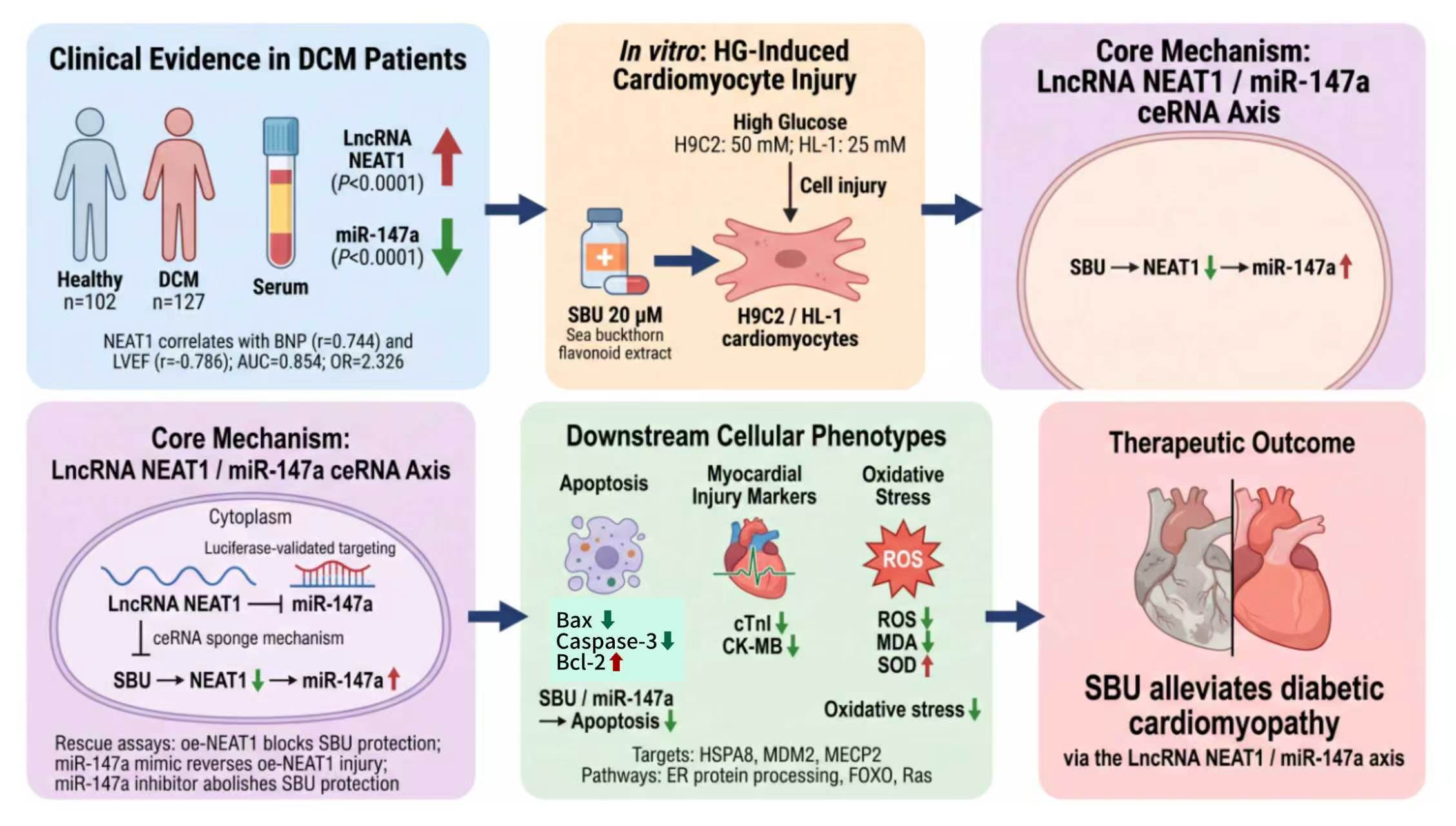
Abstract: Background: The incidence of diabetic cardiomyopathy (DCM) continues to rise. Although the pathogenesis of DCM has been progressively elucidated, effective treatment options remain insufficient. Objectives: To investigate the involvement of LncRNA NEAT1 in the protective effect of Hippophae rhamnoides extract on DCM. Methods: A total of 229 subjects were included, including 127 individuals with DCM. The cardiac condition of the patients was observed using electrocardiography and 5 mL of fasting venous blood was collected. ROC curves assessed the diagnostic value of LncRNA NEAT1 and logistic regression analysis was conducted to identify factors contributing to DCM occurrence. High-glucose (HG) models of H9C2 and HL-1 cells were constructed using 50 mM and 25 mM glucose, respectively. Cells were pretreated with 20 μM SBU to protect them. RT-qPCR detected gene expression and flow cytometry was employed to observe cell apoptosis. Results: DCM patients exhibited obvious increases in blood glucose and myocardial injury markers. Upregulation of LncRNA NEAT1 was detected in DCM patients and HG-treated cardiomyocytes. LncRNA NEAT1 was identified as a risk factor for the occurrence of DCM. SBU pretreatment was able to downregulate LncRNA NEAT1 expression in damaged cardiomyocytes. oe-LncRNA NEAT1 induced cardiomyocyte apoptosis and increased the expression of myocardial injury markers and oxidative stress levels. Meanwhile, miR-147a was downregulated in DCM patients. miR-147a acted as a negative regulatory factor in SBU-mediated protection of HG cardiomyocytes from damage and could counteract the effects of oe-LncRNA NEAT1 on cardiomyocytes. Conclusion: LncRNA NEAT1 participates in the protective effect of SBU on damaged cardiomyocytes through miR-147a.
Keywords
Diabetic cardiomyopathy
Diagnosis
Hippophae rhamnoides
LncRNA NEAT1
miR-147a