original articles
Antiulcer and antioxidant properties of Capparis
aphylla plant extracts using in-vivo and in-silico techniques
Syeda Sehrish Gillani, Mahtab Ahmad Khan, Huma Hameed, Muhammad Naveed Mushtaq, Zaib Ali Shaheryar
Available Online Date: 13 Oct 2026
Abstract
Abstract: Background: Gastric ulcer is a
prevalent global health issue, often associated with oxidative stress and
limited by the adverse effects of conventional therapies. Although Capparis
aphylla (Roth) has been traditionally used in folk medicine to manage gastric
disorders, its pharmacological activity and underlying mechanisms remain poorly
explored. Objectives:
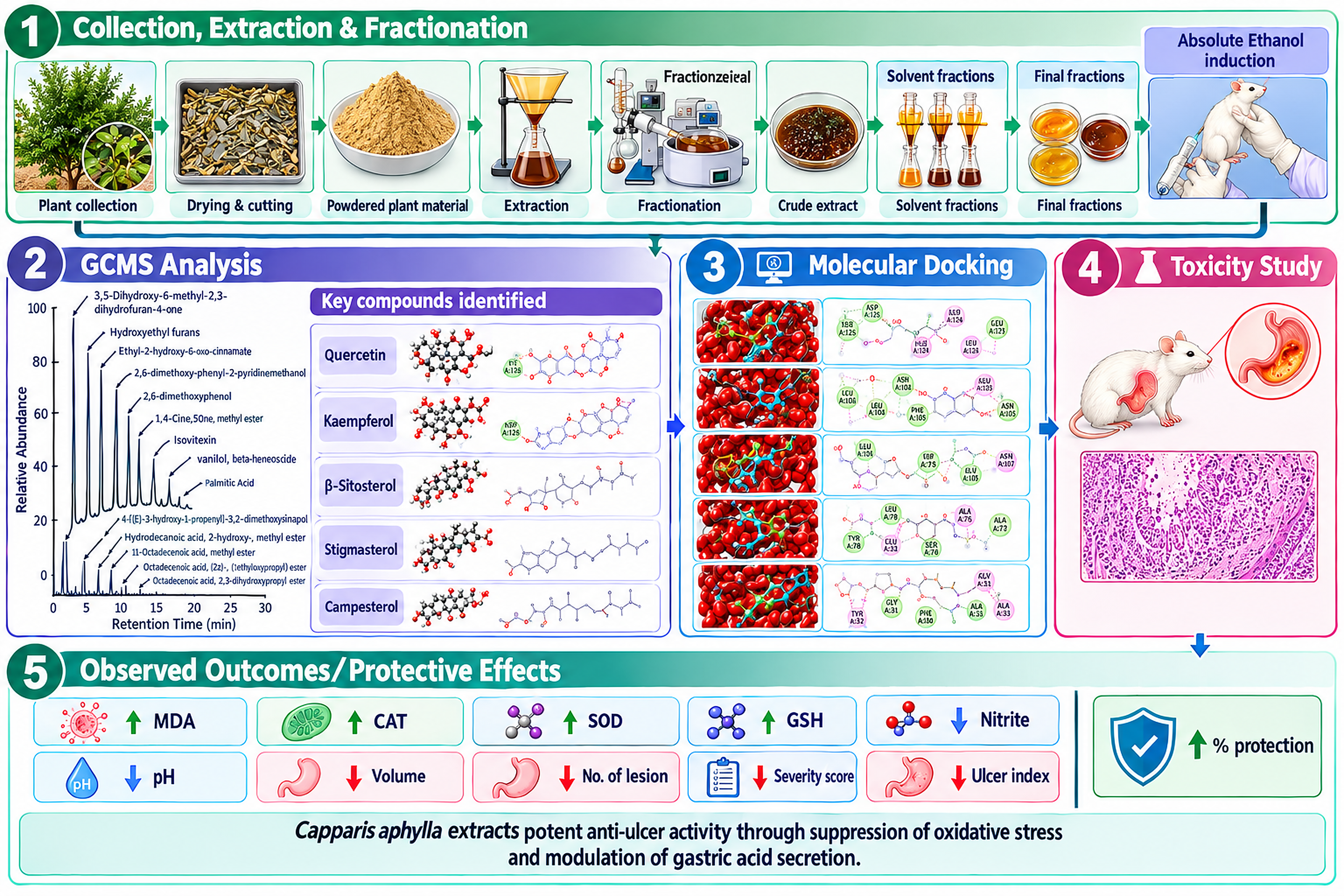
This study aimed to evaluate the gastroprotective and antioxidant effects of
Capparis aphylla stem bark extracts using an in-vivo ethanol-induced rat model, along with in silico molecular docking
analysis. Methods: Sprague-Dawley
rats were administered crude hydro-methanolic extract (CAC), aqueous (CAA), or
butanolic (CAB) fractions at doses of 100-400 mg/kg for 14 consecutive days.
Gastric ulcers were induced using absolute ethanol (90% v/v, 5 mL/kg), followed
by daily exposure to 80% ethanol to maintain gastric injury. Ranitidine (50
mg/kg) served as the reference drug. Evaluations included the ulcer index (UI),
percentage protection, gastric juice pH, total acidity, and oxidative stress
markers (SOD, CAT, GSH, MDA, and nitrite). Phytochemicals identified via GC-MS
were subjected to molecular docking against EP3, H₂ and AT1R receptors. Results: The butanolic fraction (CAB) at 400
mg/kg exhibited the highest gastroprotective effect (90% inhibition),
surpassing ranitidine (44.1%). Treatment groups showed significant restoration
of antioxidant enzymes (SOD, CAT and GSH) and marked reductions in MDA and
nitrite levels (p < 0.001). Among the 17 identified compounds,
9-octadecenoic acid methyl ester demonstrated the strongest binding affinity
(−7.9 kcal/mol) toward the EP3 receptor. Histopathological findings further confirmed
restoration of gastric mucosal integrity, particularly in the CAB-treated
group. Conclusion:
Capparis aphylla exhibits potent anti-ulcer activity through a synergistic
mechanism involving suppression of oxidative stress and modulation of gastric
acid secretion. These findings provide scientific validation for its
traditional use and highlight its promising gastroprotective potential.
Keywords
Antioxidant enzymes
Capparis aphylla
Gastric ulcer
Gastroprotection
Molecular docking