reviews
Pharmacological treatment of
attention-deficit/hyperactivity disorder in children with autism spectrum
disorder and epilepsy: Current evidence and safety considerations
Zhang Ye, Yuan Yazhen, Gou Yanyang
Available Online Date: 27 Oct 2026
Abstract
Abstract: Attention-deficit/hyperactivity disorder (ADHD)
symptoms frequently coexist with autism spectrum disorder (ASD) and epilepsy;
however, seizure manifestations, antiseizure medication (ASM) effects, sleep
disturbances and sensory or emotional factors can complicate diagnosis and
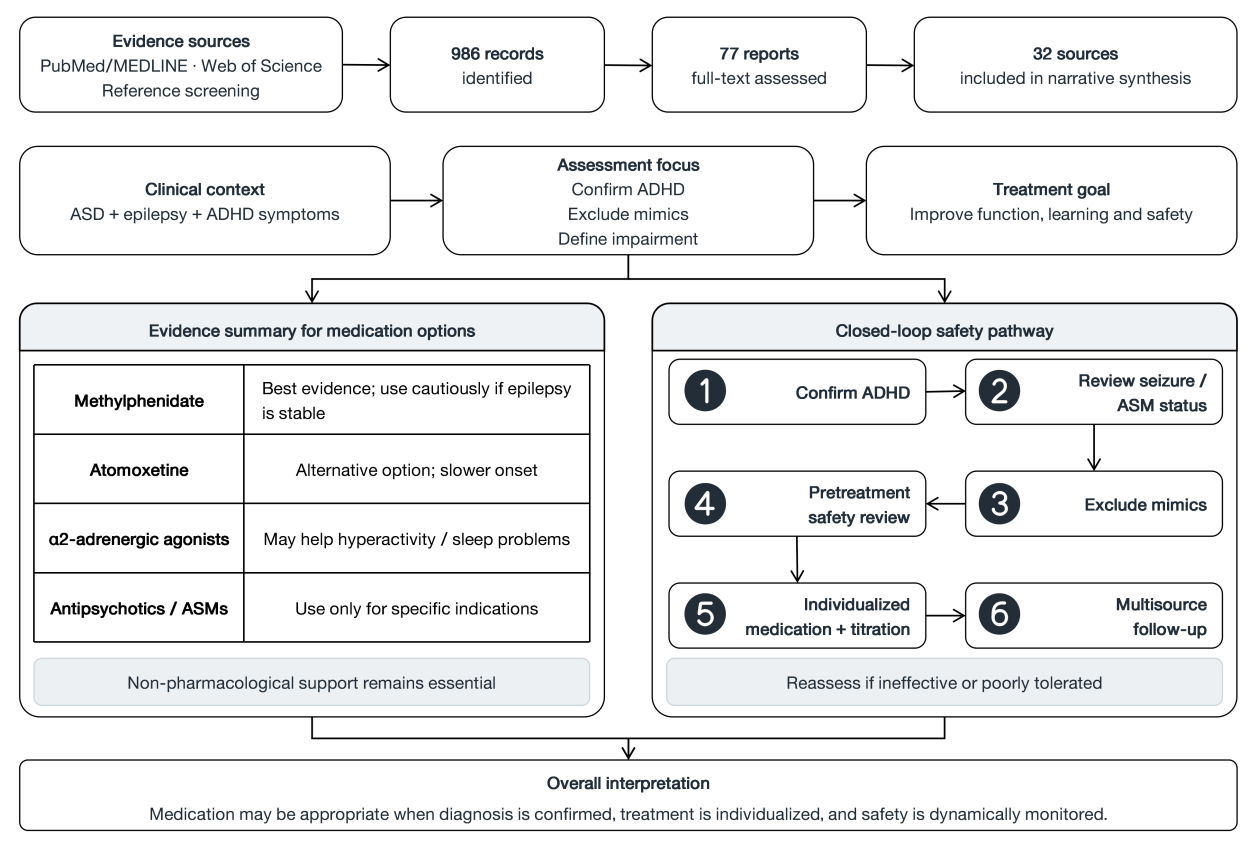
treatment. Current evidence on ADHD pharmacotherapy in children with these overlapping
conditions was synthesized in a narrative review of English-language clinical
studies, reviews and professional guidance published mainly between 2020 and
2025, together with the 2018 International League Against Epilepsy consensus.
Interpretation focused on diagnostic differentiation, seizure-related safety,
tolerability and functional outcomes. Evidence specifically involving all three
conditions remains limited. Methylphenidate has the strongest published support
for core ADHD symptoms in children with epilepsy, particularly when seizures
are stable and standard therapeutic doses are used. Atomoxetine is an
alternative when stimulant treatment is unsuitable or poorly tolerated; alpha-2
adrenergic agonists may address selected symptoms of hyperactivity,
impulsivity, or hyperarousal. Antipsychotics can be used for defined
ASD-related behavioral indications but should not be regarded as primary ADHD
treatments. A proposed clinical pathway links multisource diagnostic
confirmation, seizure and ASM baseline assessment, individualized medication
selection, gradual titration, seizure diaries, monitoring of sleep, appetite,
growth, vital signs and mood and functional feedback from caregivers and
schools. The suggested pathway provides an organizational aid rather than a
validated risk prediction instrument. Medication decisions should prioritize
demonstrable improvements in participation, learning and safety while
maintaining neurological follow-up.
Keywords
Attention-deficit/hyperactivity disorder
Autism spectrum disorder
Drug safety
Epilepsy
Methylphenidate