original articles
Bergapten ameliorates metabolic, inflammatory and reproductive
abnormalities in a high-fat diet- and letrozole-induced rat model of
polycystic ovary syndrome
Abida Hussain, Ammara Saleem, Muhammad Furqan Akhtar
Available Online Date: 05 Nov 2026
Abstract
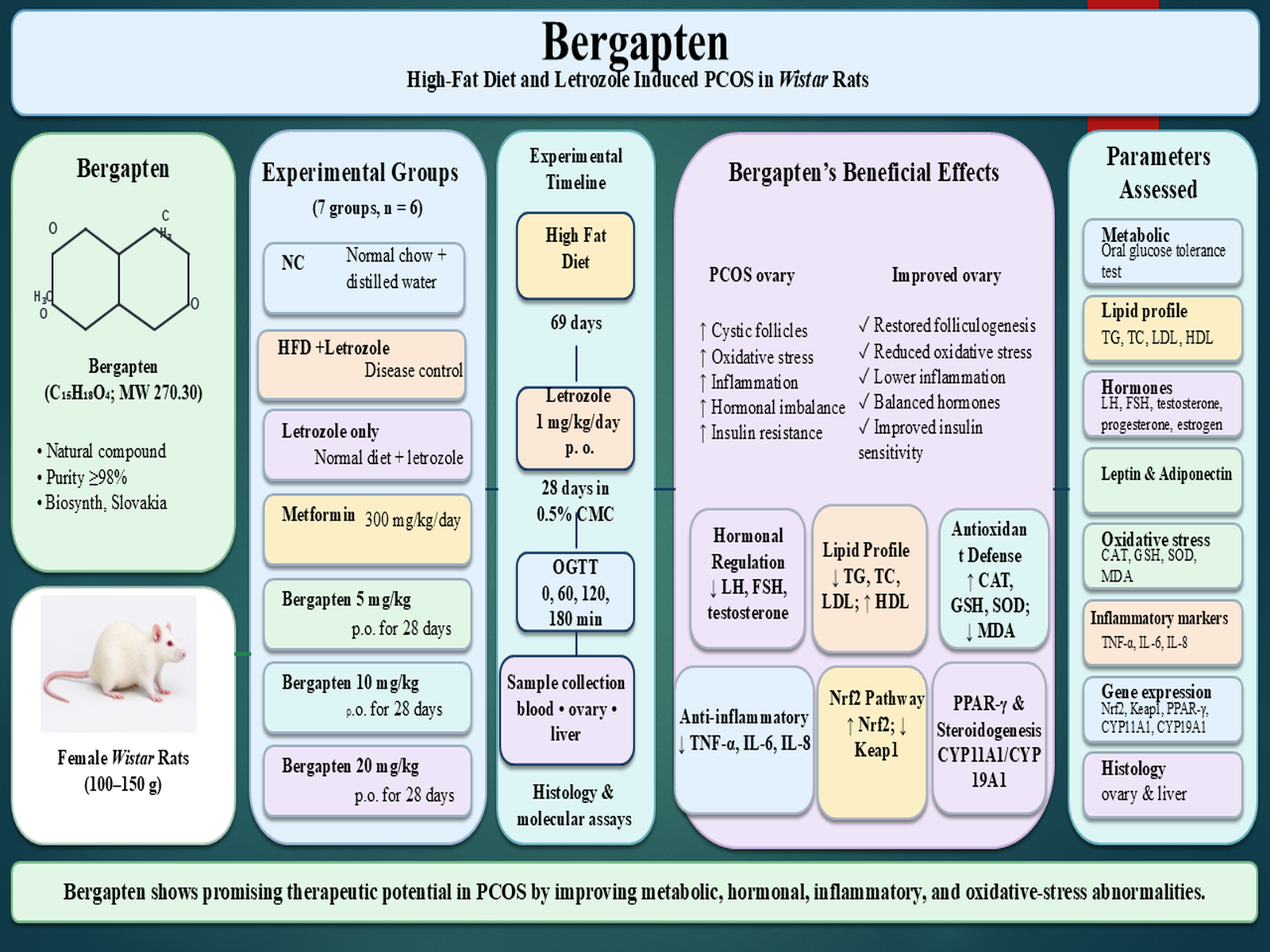
Abstract: Background: Polycystic ovary syndrome (PCOS) is a multifactorial endocrine and metabolic disorder commonly associated with obesity, insulin resistance, oxidative stress and chronic inflammation. Despite current therapeutic approaches, effective agents targeting both metabolic and reproductive abnormalities remain limited. Objectives: The present study investigated the effects of bergapten on metabolic, hormonal, inflammatory and oxidative stress–related alterations in a high-fat diet (HFD) and letrozole-induced rat model of PCOS. Methods: In a randomized experimental design, female Wistar rats (N = 42) were allocated into seven distinct groups (n = 6/group): Normal Control, Letrozole Control, HFD + Letrozole Control, Metformin (300 mg/kg) and bergapten (5, 10 and 20 mg/kg). Obesityassociated PCOS was induced by administering a high-fat diet for 12 weeks combined with letrozole for 28 days. Afterwards, respective treatments were administered orally for 28 consecutive days. Body weight, oral glucose tolerance, serum lipid profiles, reproductive hormones, adipokines, oxidative stress biomarkers, inflammatory mediators, ovarian histopathology and gene expression changes were evaluated. Results: Bergapten produced dose-dependent improvements in metabolic parameters, with the 20 mg/kg dose exhibiting the greatest restoration of body weight, glucose tolerance and lipid profile abnormalities. The effects of the highest dose were comparable to those observed with metformin (300 mg/kg), whereas the 5 and 10 mg/kg doses demonstrated partial improvements. Hormonal disturbances, oxidative stress and inflammation were significantly ameliorated following bergapten administration. Bergapten demonstrated a favorable safety profile, with an oral LD50 > 2000 mg/kg and no clinical signs of toxicity, establishing a substantial safety margin (100- to 400-fold) above the highest therapeutic dose used in this study. Conclusion: Bergapten improved metabolic and reproductive parameters in a PCOS model by reducing inflammatory cytokines and regulating key gene pathways (Nrf2/Keap1, PPAR-γ and steroidogenic enzymes). Further studies are needed to confirm causation and clinical applicability.
Keywords
Bergapten
Nuclear factor erythroid 2-related factor-2
Oxidative stress
Obesity
Polycystic ovarian syndrome