original articles
Neuroprotective and antioxidant effects of Azadirachta indica: A comprehensive
GC-MS and preclinical study
Mariam Razzak, Azra Riaz, Muhammad Ali, Shahana Wahid, Bushra Sikandar, Saira Saeed Khan, Tabbassum Zehra, Maham Nawaz, Anusha Ahmed
Available Online Date: 12 Nov 2026
Abstract
Abstract: Background: Herbal and Ayurvedic
remedies are increasingly explored for mental health disorders such as anxiety
and depression. Azadirachta indica (Neem) has long been recognized for
its medicinal value. Objectives: The current study evaluated the
neuroprotective, anxiolytic, antidepressant, antioxidant, and toxicological
effects of the ethanolic fruit extract of Azadirachta indica in
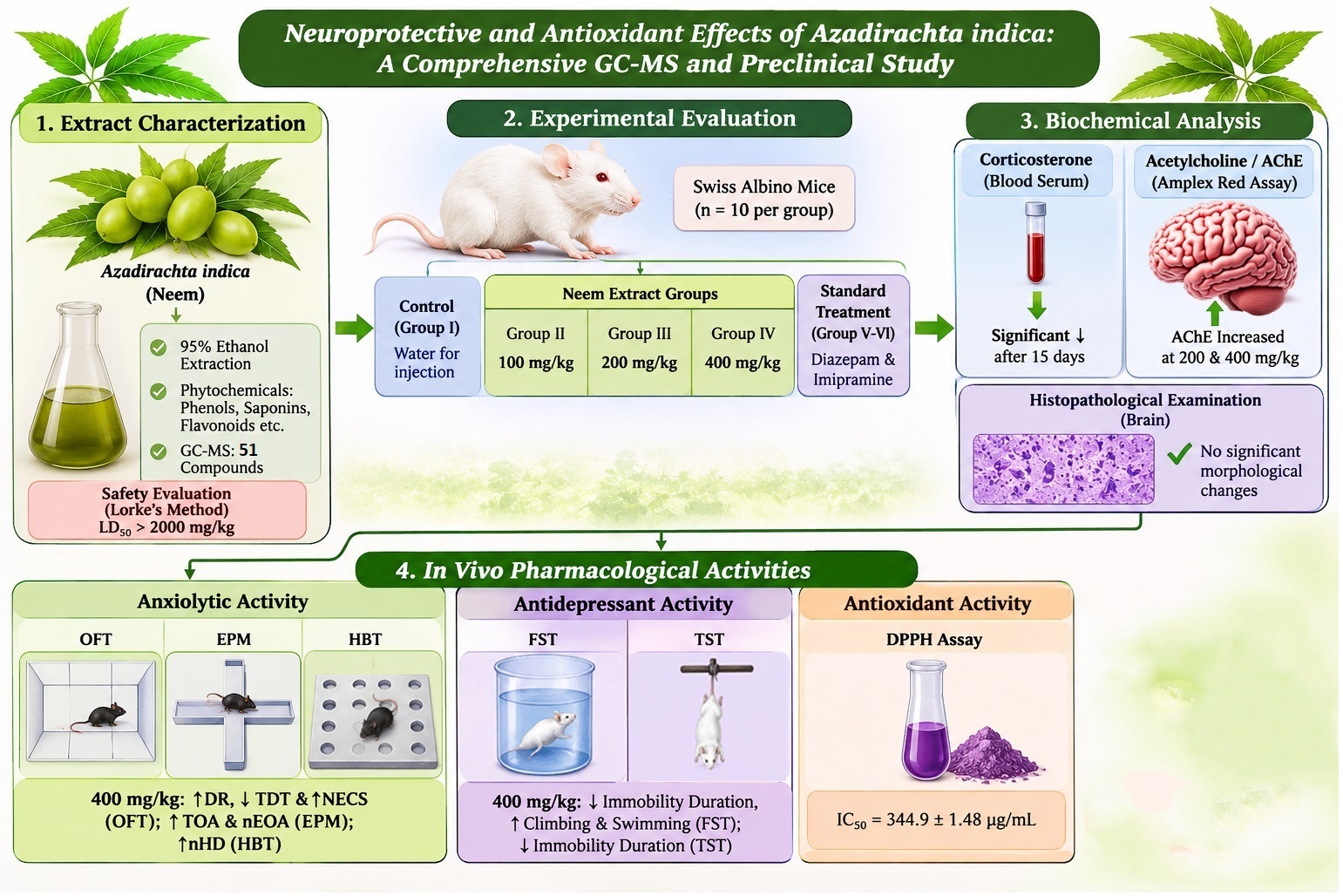
preclinical models. Methods: Anxiolytic activity was assessed
through the open field test, elevated plus maze, and hole board test, whereas
forced swimming and tail suspension tests were used to evaluate antidepressant
effects. Corticosterone and acetylcholinesterase levels, brain histopathology,
and GC-MS analysis of bioactive constituents were also performed. Results:
Azadirachta indica fruit extract exhibited strong antioxidant activity
(68.6%) and a high safety margin (LD50> 5000 mg/kg). Azadirachta
indica produced notable behavioral changes across multiple tests. Azadirachta indica at 400 mg/kg reduced locomotor activity, increased exploratory behavior,
and improved open arm preference, while also reducing head-dipping and
immobility in depression models. The histopathological evaluations showed no
morphological changes. Azadirachta indica at 200-400 mg/Kg also significantly decreased
corticosterone levels and improved acetylcholinesterase levels. GC-MS analysis
identified 51 metabolites that may contribute to these pharmacological effects.
Conclusion: Overall, these
findings suggest that Azadirachta
indica fruit extract possesses anxiolytic and antidepressant
potential, supporting its role as a natural therapeutic candidate for
neuropsychiatric disorders.
Keywords
Acetylcholinesterase
Antioxidant
Anxiolytic
Anti-depression
Corticosterone GC-MS
Neuroprotective