reviews
Short-chain fatty acids as precision immunometabolic
modulators: Engineering the microbiome for next-generation atherosclerosis
therapy
Ming Liu, Ye Chen, Qingru Meng, Zhenrui Tang
Available Online Date: 26 Nov 2026
Abstract
Abstract: Atherosclerosis
is a chronic, low-grade inflammatory process that drives most cardiovascular
diseases, beginning with endothelial injury, lipid retention and immune cell
infiltration and progressing to plaque formation and rupture. Although current
anti-inflammatory therapies, including statins, IL-1β inhibitors and colchicine,
have demonstrated cardiovascular benefit, with IL-1β inhibition validating
inflammation as a causal target and colchicine exemplifying the potential of
repurposed drugs, these approaches remain non-specific and carry systemic side
effects. Consequently, there is growing interest in identifying safer and more
targeted therapeutic strategies to control vascular inflammation and slow
disease progression. This review examines the therapeutic potential of SCFAs in
atherosclerosis, focusing on their anti-inflammatory mechanisms, emerging
microbiome-engineering strategies and opportunities for precision
cardiovascular medicine. A comprehensive literature review was conducted using
peer-reviewed articles retrieved from different scientific databases, including
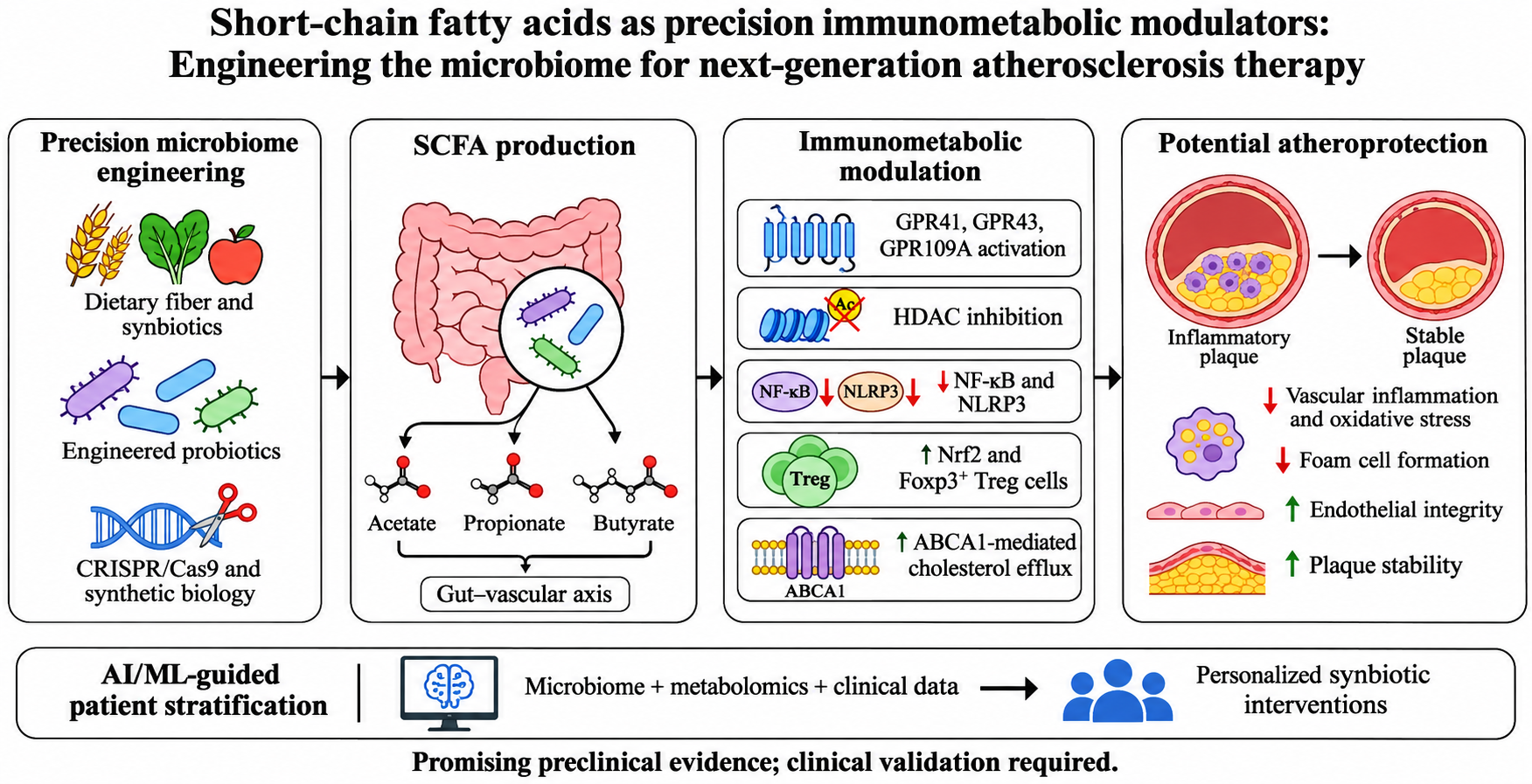
Google Scholar, PubMed, Scopus and Web of Science. SCFAs exert broad
immunomodulatory and vasculoprotective effects, supporting their therapeutic
potential through inhibition of the NLRP3 inflammasome, suppression of NF-κB
signaling, promotion of regulatory T-cell differentiation, enhancement of
endothelial barrier integrity and stabilization of atherosclerotic plaques.
Preclinical studies consistently demonstrate reduced vascular inflammation and
attenuation of plaque progression following SCFA-mediated interventions.
Emerging biotechnological approaches, including engineered probiotic platforms
and gene-editing technologies, enable targeted enhancement of SCFA production
and therapeutic efficacy. Furthermore, AI and machine learning tools facilitate
the integration of microbiome, metabolomic and clinical datasets to identify
responsive patient populations and support the development of personalized
synbiotic interventions. SCFAs represent a promising class of
microbiome-derived therapeutics that can target key inflammatory pathways
involved in atherosclerosis. Combined with advances in microbial engineering
and AI-guided precision medicine, SCFA-based interventions may offer a safer
and more targeted alternative to conventional systemic anti-inflammatory
therapies, supporting their development as next-generation strategies for
cardiovascular disease prevention and treatment.
Keywords
Atherosclerosis
Fatty Acids
Volatile
Gastrointestinal Microbiome
Inflammation
Artificial Intelligence