original articles
Multifunctional injectable hydrogel enhances functional recovery after spinal cord injury in adult rats through upregulation of the NCK1/CDK1 pathway
Yan Zhang, Caili Bao, Xiaolong Yang, Hongze Chang, Liang Liu, Xiaodong Liu, Feng Cai
Available Online Date: 27 Nov 2026
Abstract
Abstract: Background: Spinal cord injury (SCI) leads to
significant functional impairments and neurological deficits, profoundly
impacting quality of life. Despite various neuroprotective and rehabilitative
strategies, no universally accepted preventive treatment exists. Objectives:
This study aims to elucidate the underlying mechanisms of SCI to guide the
development of more effective preventative measures. Methods: We
investigated the molecular mechanisms by which a multifunctional injectable
hydrogel (MIH) improves SCI in a rat model, specifically focusing on the NCK
adaptor protein 1 (NCK1)/cyclin-dependent kinase 1 (CDK1) pathway. After
establishing the SCI model, rats in the MIH group received a 10μL injection of
MIH, while control and model groups received sterile saline. We utilized
immunofluorescence, HE staining, Western blot and qRT-PCR to analyze the
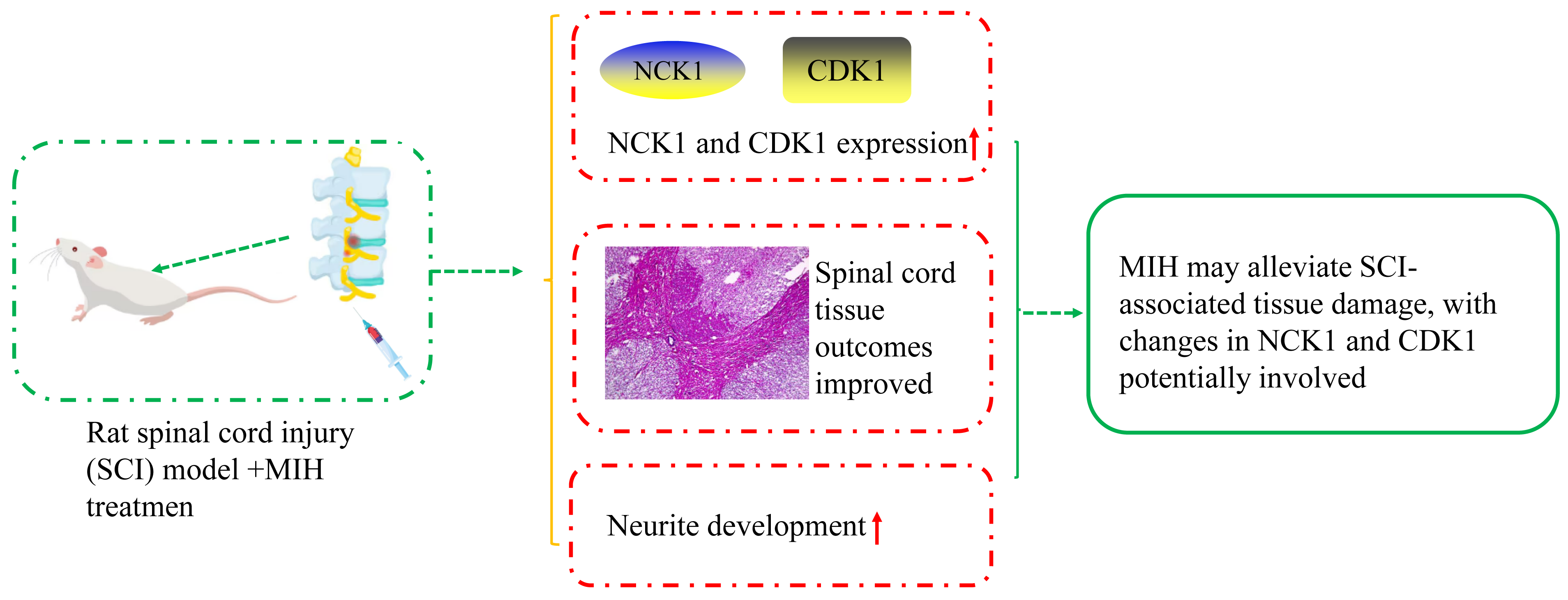
effects of MIH on SCI and its regulation of the NCK1/CDK1 pathway. Results: This findings indicate
that upregulating NCK1 and CDK1 contributes to preventing SCI progression by
enhancing cell viability and promoting neurite development in spinal cord
tissue. Conversely, downregulation of these pathways may exacerbate SCI
progression. These targets suggest potential pathways for alleviating SCI. Conclusion:
Enhancing the NCK1/CDK1 pathway may provide a promising approach to preventing
SCI by improving cellular viability and facilitating neurite growth in spinal
cord tissue.
Keywords
CDK1
Multifunctional injectable hydrogel
NCK1
Neuroprotection
Spinal cord injury