★Open Access • Peer-Reviewed • Established 1988

Pakistan Journal of Pharmaceutical Sciences

Pakistan Journal of Pharmaceutical Sciences (PJPS) is an international, peer-reviewed, open-access journal dedicated to publishing high-quality research that advances pharmaceutical, biomedical, and medicinal sciences. Published by the Faculty of Pharmacy and Pharmaceutical Sciences, University of Karachi since 1988, PJPS provides a trusted platform for researchers, academicians, clinicians, and industry professionals worldwide to disseminate innovative discoveries, foster scientific collaboration, and accelerate the translation of research into better healthcare outcomes. We welcome original research, reviews, and emerging innovations that shape the future of pharmaceutical sciences.

Journal Cover 39 Issue 11
0.6
IMPACT FACTOR
Clarivate Analytics
1011-601X/3105-9686
ISSN PRINT / ONLINE
Since 1988
12500+
TOTAL CITATIONS
Google Scholar
6000+
ARTICLES PUBLISHED
Peer-Reviewed
100+
COUNTRIES REACHED
Global Readership

Latest Research Articles

Browse All Articles
original articlesPublished: 01 Jan 2027
Volume 40, Issue 1

Chemical fingerprinting and simultaneous determination of main compounds combined with multivariate analysis of the Syringa pubescens Turcz. leaves from different origins

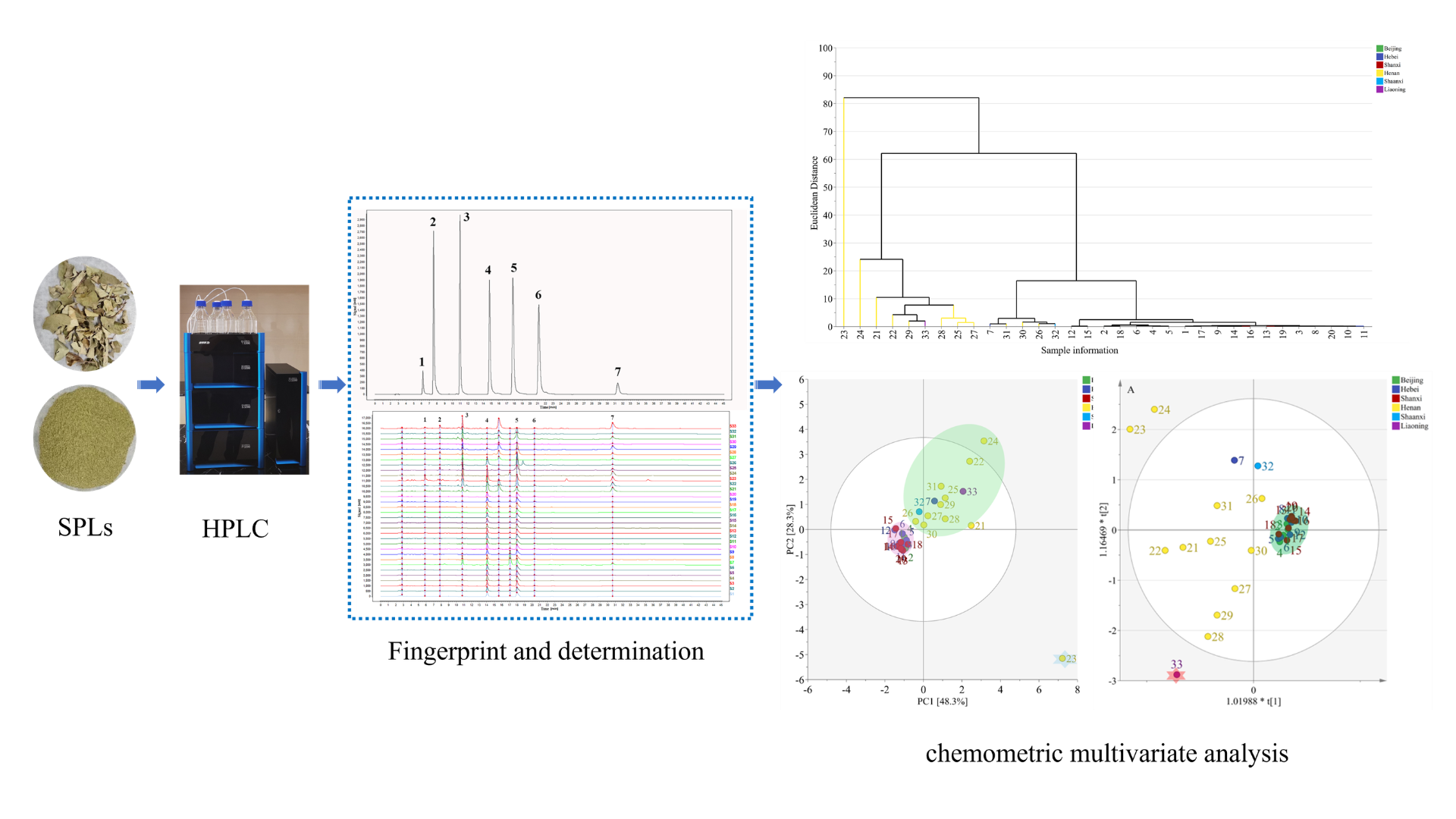
Abstract: Background: Syringa pubescens Turcz. is a folk medicinal plant in Henan Province, China and its leaves have been used for medicinal purposes. However, the bioactive compound content varies with geographical origin and quality control methods remain limited. Objectives: This aim is to develop a reliable HPLC method for the simultaneous determination of seven bioactive compounds in S. pubescens leaves from different origins and to evaluate sample differences using chemometric analysis. Methods: Thirty-three batches of leaves from six main regions in China were analyzed using HPLC. Hierarchical cluster analysis (HCA), principal component analysis (PCA) and orthogonal partial least squares discriminant analysis (OPLS-DA) were employed to the quantitative data. Results: All seven components showed good linearity (R² > 0.999). Recovery ranged from 98.23% to 100.12% and RSD values for precision and stability were below 1.84%. The contents of echinacoside, verbascoside and oleuropein were higher than those of other ingredients. HCA and PCA classified the 33 batches into three groups according to their geographical origin. OPLS-DA further differentiated the samples, with oleuropein, echinacoside, verbascoside and syringin identified as major discriminating markers. Conclusion: These findings could support the resource development and utilization and provide a reference for the quality control of SPLs.
Chemical fingerprinting and simultaneous determination of main
compounds combined with multivariate analysis of the Syringa
pubescens Turcz. leaves from different origins
Page No:32-39
Xinyi Guan, Suya Zhang, Yitong ShiView more
View Abstract
original articlesPublished: 01 Jan 2027
Volume 40, Issue 1

Effect of new zaogong erteng decoction on embryo implantation in mice following treatment of endometritis

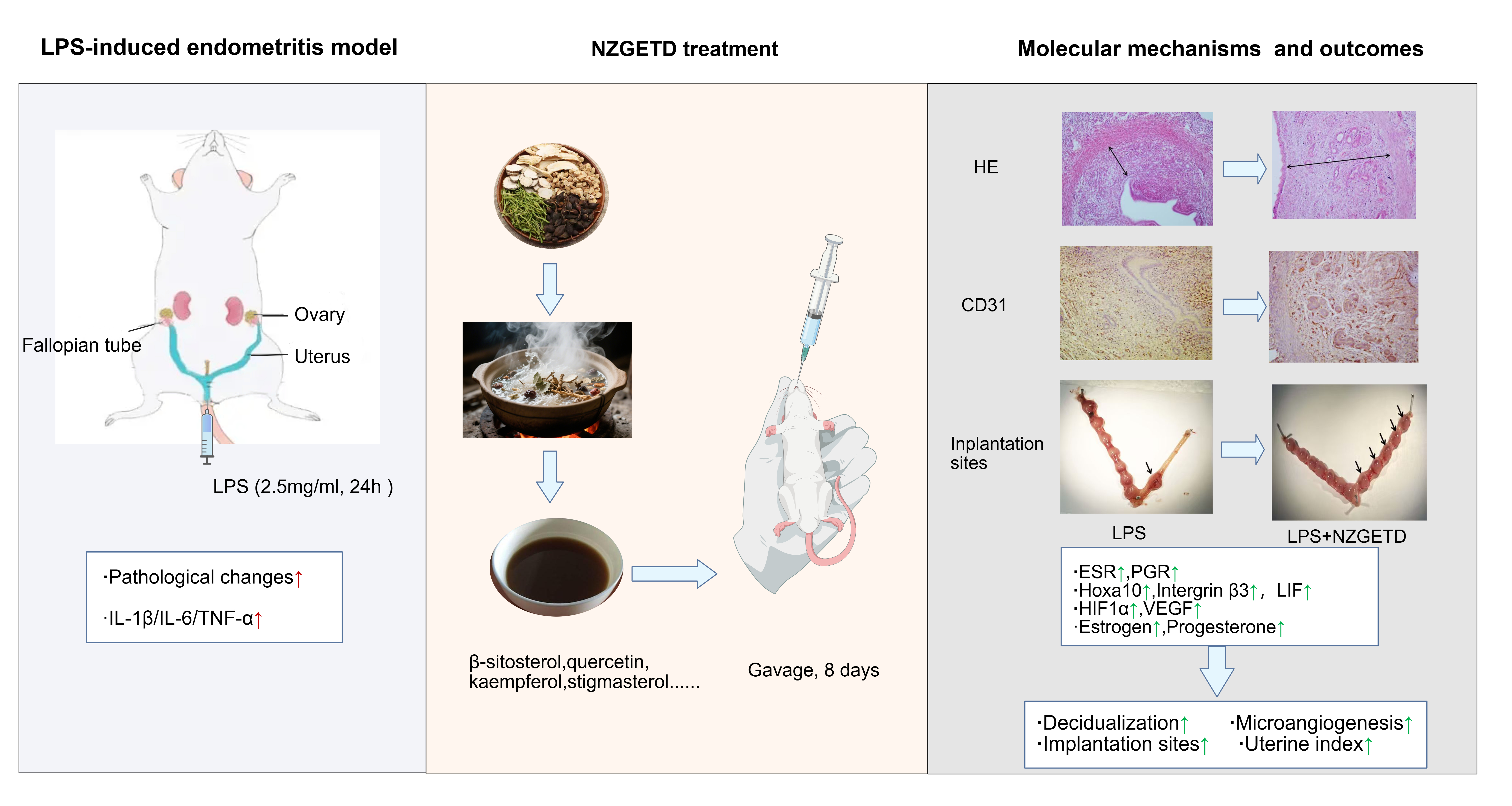
Abstract: Background: New zaogong erteng decoction (NZGETD) is a compound Chinese medicine modified from the Zaogong Erteng Decoction. Previous clinical observations suggested its potential efficacy against endometritis, an inflammatory condition that adversely impacts endometrial receptivity and embryo implantation. Objectives: In this study, the role and mechanism of NZGETD in improving embryo implantation were investigated in a mouse model of lipopolysaccharide-induced endometritis. Methods: Female mice were treated with 2.5 mg/mL lipopolysaccharide in the endometrium for 24 h to induce endometritis and were subsequently gavaged with NZGETD for 8 days. Pathological changes, inflammatory cytokine levels, uterine index, endometrial decidualization, microangiogenesis and hormone levels were assessed. Network pharmacology analysis was employed to identify potential active components and targets. The expression of key proteins related to endometrial receptivity and implantation was confirmed by western blotting. Results: NZGETD attenuated lipopolysaccharide-induced pathological changes and downregulated uterine levels of IL-1β, IL-6 and TNF-α, indicating its anti-inflammatory effect in this endometritis model. NZGETD significantly increased the uterine index, promoted endometrial decidualization and microangiogenesis (upregulated CD31 on gestational day 4.5). Additionally, NZGETD significantly elevated uterine levels of estrogen and progesterone and increased the number of implantation sites on gestational day 8.5. Network pharmacology analysis screened beta-sitosterol, quercetin, kaempferol and stigmasterol as the common active components of NZGETD. Western blotting confirmed that NZGETD up-regulated ESR, PGR, Hoxa10, integrin β3, LIF, HIF1α and VEGF during embryo implantation. Conclusion: In a mouse model of lipopolysaccharide-induced endometritis, NZGETD promoted decidualization and microangiogenesis of the endometrium, enhanced endometrial receptivity and facilitated embryo implantation.

Effect of new zaogong
erteng decoction on embryo implantation in mice following treatment of
endometritis
Page No:16-31
Shuang Li, Huiling Liu, Nan KangView more
View Abstract
original articlesPublished: 01 Jan 2027
Volume 40, Issue 1

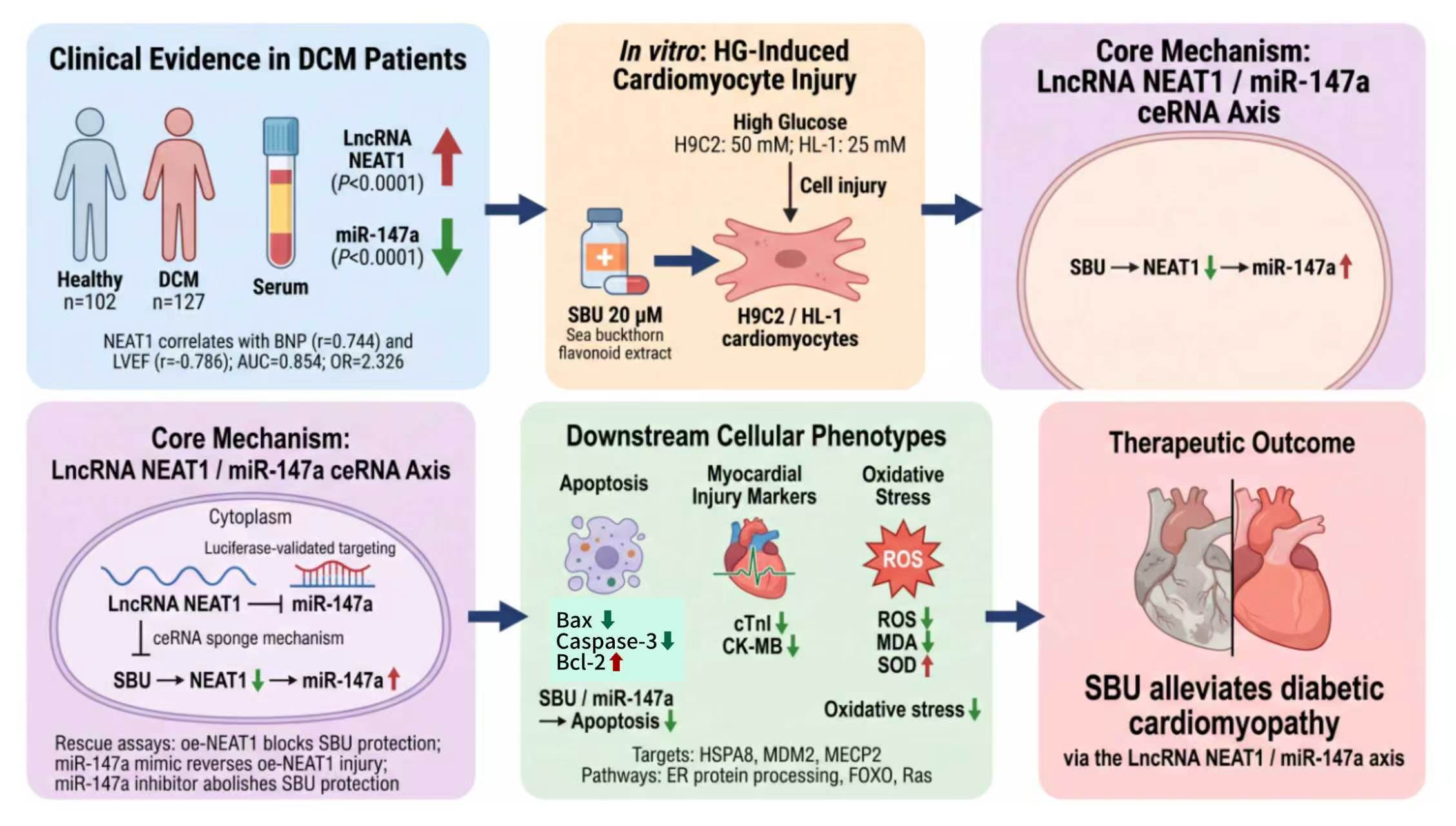
Hippophae rhamnoides extract alleviates diabetic cardiomyopathy via the LncRNA NEAT1/miR-147a axis

Abstract: Background: The incidence of diabetic cardiomyopathy (DCM) continues to rise. Although the pathogenesis of DCM has been progressively elucidated, effective treatment options remain insufficient. Objectives: To investigate the involvement of LncRNA NEAT1 in the protective effect of Hippophae rhamnoides extract on DCM. Methods: A total of 229 subjects were included, including 127 individuals with DCM. The cardiac condition of the patients was observed using electrocardiography and 5 mL of fasting venous blood was collected. ROC curves assessed the diagnostic value of LncRNA NEAT1 and logistic regression analysis was conducted to identify factors contributing to DCM occurrence. High-glucose (HG) models of H9C2 and HL-1 cells were constructed using 50 mM and 25 mM glucose, respectively. Cells were pretreated with 20 μM SBU to protect them. RT-qPCR detected gene expression and flow cytometry was employed to observe cell apoptosis. Results: DCM patients exhibited obvious increases in blood glucose and myocardial injury markers. Upregulation of LncRNA NEAT1 was detected in DCM patients and HG-treated cardiomyocytes. LncRNA NEAT1 was identified as a risk factor for the occurrence of DCM. SBU pretreatment was able to downregulate LncRNA NEAT1 expression in damaged cardiomyocytes. oe-LncRNA NEAT1 induced cardiomyocyte apoptosis and increased the expression of myocardial injury markers and oxidative stress levels. Meanwhile, miR-147a was downregulated in DCM patients. miR-147a acted as a negative regulatory factor in SBU-mediated protection of HG cardiomyocytes from damage and could counteract the effects of oe-LncRNA NEAT1 on cardiomyocytes. Conclusion: LncRNA NEAT1 participates in the protective effect of SBU on damaged cardiomyocytes through miR-147a.

Hippophae rhamnoides extract alleviates diabetic cardiomyopathy via
the LncRNA NEAT1/miR-147a axis
Page No:1-15
Wenbo Li, Chengwu Kuang, Qianyun XuView more
View Abstract
original articlesPublished: 01 Dec 2026
Volume 39, Issue 12

Corrigendum to: Bone marrow mesenchymal stem cells relieve rheumatoid arthritis by blocking JAK/STAT and TLR-4/NF-κB pathways

The authors have informed the Pakistan Journal of Pharmaceutical Sciences (PJPS) of an error in Figure 5 of the published article. During the editorial revision process, an incorrect version of Figure 5 was inadvertently included in the final published version. The authors have confirmed that the extreme-right panel (panel D) should be removed and that the remaining panels constitute the corrected Figure 5.Accordingly, Figure 5 is corrected by removing panel D. No other part of the figure is modified. The caption of Figure 5 remains unchanged, and no other figures or content of the article require modification. This corrigendum records the correction to the published version of the article. The correction is limited to the removal of panel D from Figure 5.

Page No:3940
Shilin Lian, Xiao Ma, Yichen MengView more
View Abstract
original articlesPublished: 01 Dec 2026
Volume 39, Issue 12

Corrigendum to: An in vitro method to study pancreatic acinar cells and centroacinar cells: Co-culture of rat pancreatic acinar cells AR42J and human pancreatic ductal epithelial cells HPDE6-C7

The authors request to change the acknowledgment statement section because of mistake in the statement. The correct acknowledgment is mentioned in the text below: “The present study was funded by the joint project on Regional High Incidence Diseases Research of Guangxi Natural Sciences Foundation under Grant No. 2024GXNSFAA010406 and the National Natural Sciences Foundation of China under Grant No. 81970558”

Page No:3939
Yifang Huo, Huiying Yang, Zhihai LiangView more
View Abstract

Browse by Topic

Research Scope & Subjects

Editorial Leadership

View Former Editors-in-Chief

Prof. Dr. Harris Shoaib

Editor-in-Chief

Faculty of Pharmacy and Pharmaceutical Sciences, University of Karachi, Karachi, Pakistan.

Specializing in Pharmacognosy and Natural Products Research, with over three decades of contribution to global pharmaceutical sciences.

2020 — PRESENT

Indexed & Abstracted in Leading Databases