Open Access Peer-Reviewed Established 1988

Pakistan Journal of Pharmaceutical Sciences

Pakistan Journal of Pharmaceutical Sciences (PJPS) is an international, peer-reviewed, open-access journal dedicated to publishing high-quality research that advances pharmaceutical, biomedical, and medicinal sciences. Published by the Faculty of Pharmacy and Pharmaceutical Sciences, University of Karachi since 1988, PJPS provides a trusted platform for researchers, academicians, clinicians, and industry professionals worldwide to disseminate innovative discoveries, foster scientific collaboration, and accelerate the translation of research into better healthcare outcomes. We welcome original research, reviews, and emerging innovations that shape the future of pharmaceutical sciences.

Journal Cover Vol 39
0.6
IMPACT FACTOR
Clarivate Analytics
1011-601X/3105-9686
ISSN PRINT / ONLINE
Since 1988
12400+
TOTAL CITATIONS
Google Scholar
3500+
ARTICLES PUBLISHED
Peer-Reviewed
89+
COUNTRIES REACHED
Global Readership

Latest Research Articles

Browse All Articles
original articlesPublished: 2026-10-01
Volume 39, Issue 10

Development and validation of RP-HPLC method for fast dispersible tablets of vonoprazan fumarate: Quantification and its application to forced degradation studies

Background: Vonoprazan fumarate (VF) is indicated to treat drug-induced peptic and gastroduodenal ulcers. Various chromatographic, fluorometric and spectrophotometric methods have been reported for the quantification and identification of known and unknown impurities of VF in pharmaceutical formulations and biological samples. Objectives: The study aimed to develop a robust and cost-effective HPLC validated method for the analysis of VF. The method is also capable of detecting all possible degradation products and is used to characterize the stability of the VF. Methods: An RP-HPLC method with UV detection (254 nm) using C8 column (4.6 X 150mm, 5µm) was developed and validated for the quantification of VF and used to detect all possible degradation products in fast-dispersible tablets. The method validation of fast dispersible VF tablets was performed by adopting various standard validation parameters (i.e. linearity, precision, accuracy, specificity, limit of detection, limit of quantitation and robustness). The forced degradation studies have been carried to investigate the stability of the VF as per ICH guidelines. Results: The tR of VF was 2.6 min. The method showed reproducibility within ±2%. The forced degradation studies show that VF is highly prone to degradation under alkaline conditions, while exhibiting greater stability in acidic media. The oxidative stress, photo and thermal degradation of VF show comparatively lesser degradation or relatively greater stability of VF. Conclusion: A simple, robust and cost-effective chromatographically validated method has been established to analyze fast-dispersible VF tablets and has been successfully applied to the stability characterization of VF.

Page No:2928-2936
Atta-Ur-Rehman, Farya Zafar, Kiran QadeerView more
View Abstract
original articlesPublished: 2026-10-01
Volume 39, Issue 10

Network pharmacology and molecular simulation suggest potential mechanisms of sorafenib-induced HFSR

Background: Hand–foot skin reaction (HFSR) is a dose-limiting adverse effect of sorafenib, yet its molecular etiology remains elusive. Objectives: This study investigated the potential targets and pathways of sorafenib-induced HFSR using integrated computational methods. Methods: Network pharmacology was used to identify overlapping targets between sorafenib and HFSR. After pathway enrichment, hub targets were analyzed via molecular docking and 100-ns molecular dynamics (MD) simulations to assess binding stability. Results: Network analysis identified 71 targets, primarily in the MAPK/ERK and PI3K-Akt pathways. EGFR and MAPK1 (ERK2) were identified as key hubs. MD simulations revealed that sorafenib maintains superior structural stability when complexed with EGFR rather than with ERK2. Conclusion: Computational evidence suggests that off-target engagement and RTK-MAPK/PI3K dysregulation mediate HFSR. These findings provide a mechanistic basis for mitigating sorafenib-induced toxicity, pending experimental validation.

Page No:2937-2949
Li qian Wang, Si qi Zhang, Ling GuoView more
View Abstract
original articlesPublished: 2026-10-01
Volume 39, Issue 10

Quercetin as the core constituent of Huanglian decoction: Targeting AKT1 for colorectal cancer therapy

Background: Colorectal cancer (CRC) is a prevalent gastrointestinal carcinoma. Huanglian decoction (HD) has been applied to treat gastrointestinal disorders for millennia. Objectives: This study utilized network pharmacology strategies to establish the drug–compound–disease target network. Methods: To explore the biological functions and pathways involved, GO and KEGG enrichment analyses were conducted. To identify core targets from the findings, a protein-protein interaction (PPI) network was constructed. We utilized the molecular docking assay, CETSA and DARTS to validate the compound-target complex. The biological effects of the key compound on CRC cells were studied using CCK-8 assay, colony-formation assay, scratch test and trans well invasion assay. Results: Our findings indicated that half of the HD potential targets were CRC-related genes. PPI analysis identified 7 key genes: AKT1, ESR1, JUN, IL6, MYC, FOS and CCND1. Quercetin was identified as a core active compound of HD, which likely exerts its effects by targeting AKT1 and inhibiting the AKT-mTOR pathway, thereby suppressing the proliferation, migration and invasion of CRC cell lines (Caco-2 and SW480). Conclusion: The results suggest that HD has potential therapeutic properties against CRC. Its active ingredient, quercetin, exerted anti-CRC effects by binding to AKT1 and inhibiting the activation of the AKT-mTOR pathway.

Page No:2950-2959
Yongjian Ye, Xiaoxia Wang, Xusan Xu
View Abstract
original articlesPublished: 2026-10-01
Volume 39, Issue 10

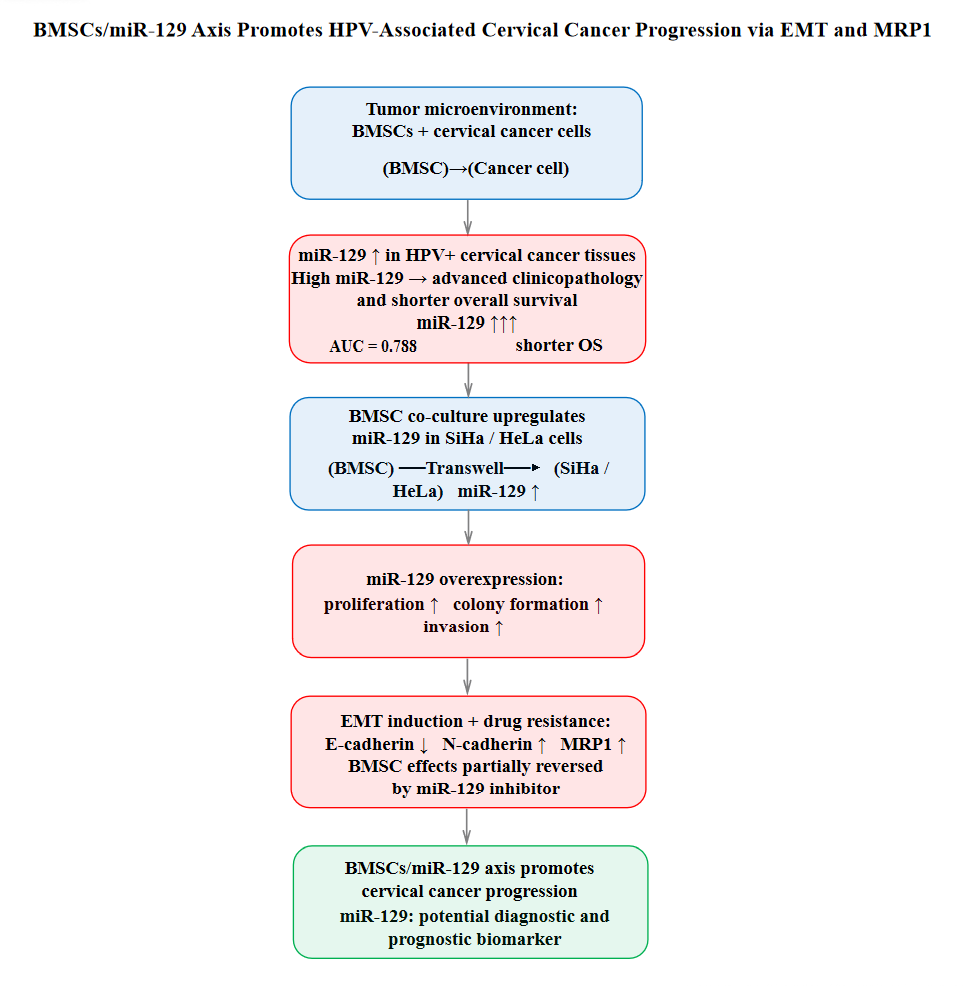
Effect of SJAMP on mTOR/p70S6K signaling pathway and invasion and migration ability of HeLa cells in cervical cancer

Background: SJAMP, a natural polysaccharide compound, has demonstrated significant inhibitory effects on various tumor models. Whether it plays a role in cervical cancer is unclear. Objectives: To explore the effects of SJAMP on the mTOR/p70S6K signaling pathway and the invasion and migration abilities of cervical cancer HeLa cells. Methods: The HeLa cells were divided into blank/solvent/polymer control groups and 1.2, 3.2 and 6.4 g/L SJAMP treatment groups. The cell proliferation, migration, invasion abilities, as well as the expression of mTOR/p70S6K protein and mRNA were detected. Results: As the concentration of SJAMP increased, the proliferation, migration and invasion abilities of HeLa cells were significantly reduced (all P < 0.05) and the protein and mRNA expressions of mTOR and p70S6K also decreased in a concentration-dependent manner (all P < 0.05). Conclusion: SJAMP can effectively inhibit the proliferation, migration and invasion of cervical cancer HeLa cells and this inhibitory effect is strongly dose-dependent and correlates with the downregulation of the mTOR/p70S6K signaling pathway.

Page No:2960-2967
Jun Gao, Yawen Liu, Guifang Sun
View Abstract
original articlesPublished: 2026-10-01
Volume 39, Issue 10

Changyanqing decoction ameliorates ulcerative colitis via PI3K-Akt pathway: Insights from network pharmacology and in-vitro validation

Background: Ulcerative colitis (UC) is a chronic inflammatory bowel disease with limited therapeutic options and notable side effects. Changyanqing (CYQHJ) Decoction, a traditional Chinese medicine formula, has shown therapeutic potential; however, its underlying mechanisms remain unclear. Objectives: This study aimed to elucidate the pharmacological mechanisms of CYQHJ in UC, with a focus on identifying key bioactive compounds and signaling pathways. Methods: Network pharmacology was leveraged to pinpoint potential targets, bioactive compounds and signaling pathways underlying CYQHJ’s therapeutic effects. Protein–protein interaction and KEGG enrichment analyses highlighted PI3K-Akt as a central pathway. In-vitro assays using Caco-2 cells validated the protective and anti-inflammatory effects of quercetin, the major active compound, in a DSS-induced injury model. Cell viability (CCK-8), cytokines (ELISA) and pathway protein expression (Western blot) were evaluated. Results: Quercetin was identified as a key compound targeting PI3K-Akt signaling. It significantly improved cell viability and reduced TNF-? and IL-6 levels (P<0.001). Western blot confirmed quercetin inhibited PI3K and Akt phosphorylation, while the PI3K-Akt activator Recilisib reversed these effects (P<0.001). Conclusion: CYQHJ exerts anti-inflammatory effects against UC mainly through PI3K-Akt inhibition, with quercetin as the core bioactive compound, providing mechanistic insight into its therapeutic action.

Page No:2968-2978
Longling Cong, Xuechuan Wang, Wei HeView more
View Abstract

Browse by Topic

Research Scope & Subjects

Editorial Leadership

View Former Editors-in-Chief

Prof. Dr. Harris Shoaib

Editor-in-Chief

Faculty of Pharmacy and Pharmaceutical Sciences, University of Karachi, Karachi, Pakistan.

Specializing in Pharmacognosy and Natural Products Research, with over three decades of contribution to global pharmaceutical sciences.

2020 — PRESENT

Indexed & Abstracted in Leading Databases